Buy architekten.info ?
We are moving the project
architekten.info .
Are you interested in purchasing the domain
architekten.info ?
domain@kv-gmbh.de · 0541-91531010
Buy architekten.info ?
What is an isometry with non-orthogonal corners?
An isometry with non-orthogonal corners is a transformation that preserves distances and angles, but the corners of the shape are not at right angles to each other. This means that the shape is still congruent to its original form after the transformation, but the angles at the corners are not 90 degrees. Isometries with non-orthogonal corners can include rotations, reflections, translations, and glide reflections. These transformations are important in geometry and can be used to study the properties of shapes and figures. **
What is an isometry with non-orthogonal vertices?
An isometry with non-orthogonal vertices is a transformation that preserves distances and angles between points, but the vertices are not at right angles to each other. This means that the shape is still congruent to its original form, but the angles between the edges are not necessarily 90 degrees. Isometries with non-orthogonal vertices can include translations, rotations, reflections, and glide reflections. These transformations are important in geometry and can help us understand the properties of shapes in different orientations. **

Similar search terms for Non-orthogonal
Top-Angebote
Products related to Non-orthogonal:
-
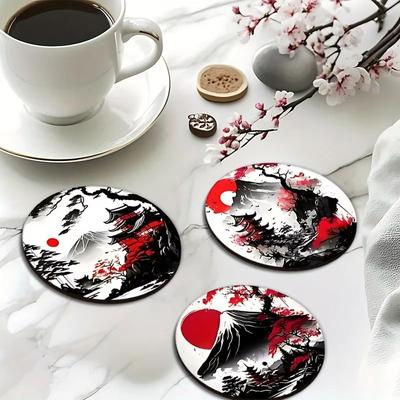
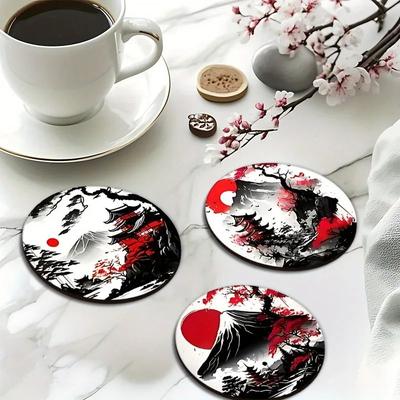
Inspired Living Japanese Landscape Wooden Coaster Set Heatproof Non Slip Drink Coasters (6 Piece) Japanese Landscape Wooden Coaster Set Heatproof Non Slip Drink Coasters (6 Piece)Bring a sense of calm and elegance to your everyday moments with this beautifully crafted wooden coaster set. Designed for those who appreciate both function and aesthetics, these coasters blend traditional artistry with modern practicality. Each...23,97 $*Shipping: 0,00 $Secure redirect to the provider
-
Galerie Wallcoverings Hotel Rolling Hills Landscape Non-woven Glitter Wallpaper RollYour bedroom or any other space can be beautifully transformed into serene sanctuary surrounded by nature with this textured misty landscape of endless rolling hills.273,53 $*Shipping: 0,00 $Secure redirect to the provider


-
What is an orthogonal vector?
An orthogonal vector is a vector that is perpendicular to another vector. In other words, two vectors are orthogonal if their dot product is zero. Geometrically, this means that the two vectors form a 90-degree angle with each other. Orthogonal vectors are important in many areas of mathematics and physics, including linear algebra and vector calculus. **
-
What does the term orthogonal mean?
The term orthogonal refers to two things being perpendicular or at right angles to each other. In mathematics, it often refers to vectors or matrices that are perpendicular to each other. In a broader sense, it can also refer to any two things that are independent or unrelated to each other. **
-
Are linearly independent vectors always orthogonal?
No, linearly independent vectors are not always orthogonal. Linear independence means that no vector in the set can be written as a linear combination of the others, while orthogonality means that the vectors are perpendicular to each other. It is possible for linearly independent vectors to be orthogonal, but it is not a guarantee. For example, in three-dimensional space, the vectors (1, 0, 0), (0, 1, 0), and (0, 0, 1) are linearly independent and orthogonal, but the vectors (1, 1, 0) and (0, 1, 1) are linearly independent but not orthogonal. **
-
When are planes and lines orthogonal?
Planes and lines are orthogonal when the line is perpendicular to the plane. This means that the line forms a 90-degree angle with the plane, creating a right angle. In other words, the direction of the line is perpendicular to the direction of the plane. This relationship is important in geometry and engineering, as it affects the intersection and orientation of different geometric elements. **


What is non-periodic form design?
Non-periodic form design refers to a design that does not follow a regular, repeating pattern or structure. Instead, it often incorporates irregular shapes, asymmetry, and varying elements to create a dynamic and visually interesting composition. Non-periodic form design can be found in various art forms, such as architecture, graphic design, and interior design, and it often conveys a sense of movement, spontaneity, and creativity. This type of design allows for greater freedom and expression, as it breaks away from traditional, repetitive patterns and encourages unique and innovative arrangements. **
What is a proof of two orthogonal?
Two vectors are considered orthogonal if their dot product is equal to zero. This means that the angle between the two vectors is 90 degrees, forming a right angle. Mathematically, if vectors u and v are orthogonal, then u · v = 0. This property can be used to prove that two vectors are orthogonal by calculating their dot product and showing that it equals zero. **
Top-Angebote
Products related to Non-orthogonal:
-
"BergHOFF Graphite Non-stick Ceramic Grill Pan 11"", Sustainable Recycled Material - 11""""Leo Graphite Square grill pan 11"" is built with sustainable and healthy non-toxic, PTFE free, PFAS free non-stick CeraGreen ceramic coating, recycled aluminum for no oil, no fat cooking, suitable for all types of stoves."119,99 $*Shipping: 0,00 $Secure redirect to the provider
-
Inspired Finds Japanese Landscape Wooden Coaster Set 6pcs Heatproof Non Slip Drink Coasters Japanese Landscape Wooden Coaster Set 6pcs Heatproof Non Slip Drink CoastersBring a sense of calm and refined style to your table with this elegant wooden coaster set inspired by traditional Japanese landscapes. Designed to protect your surfaces while enhancing your decor, this Japanese coaster set blends functionality with...48,99 $*Shipping: 0,00 $Secure redirect to the provider
-
Inspired Living Japanese Landscape Wooden Coaster Set Heatproof Non Slip Drink Coasters (6 Piece) Japanese Landscape Wooden Coaster Set Heatproof Non Slip Drink Coasters (6 Piece)Bring a sense of calm and elegance to your everyday moments with this beautifully crafted wooden coaster set. Designed for those who appreciate both function and aesthetics, these coasters blend traditional artistry with modern practicality. Each...23,97 $*Shipping: 0,00 $Secure redirect to the provider
-
Galerie Wallcoverings Hotel Rolling Hills Landscape Non-woven Glitter Wallpaper RollYour bedroom or any other space can be beautifully transformed into serene sanctuary surrounded by nature with this textured misty landscape of endless rolling hills.273,53 $*Shipping: 0,00 $Secure redirect to the provider
-
What is an isometry with non-orthogonal corners?
An isometry with non-orthogonal corners is a transformation that preserves distances and angles, but the corners of the shape are not at right angles to each other. This means that the shape is still congruent to its original form after the transformation, but the angles at the corners are not 90 degrees. Isometries with non-orthogonal corners can include rotations, reflections, translations, and glide reflections. These transformations are important in geometry and can be used to study the properties of shapes and figures. **
-
What is an isometry with non-orthogonal vertices?
An isometry with non-orthogonal vertices is a transformation that preserves distances and angles between points, but the vertices are not at right angles to each other. This means that the shape is still congruent to its original form, but the angles between the edges are not necessarily 90 degrees. Isometries with non-orthogonal vertices can include translations, rotations, reflections, and glide reflections. These transformations are important in geometry and can help us understand the properties of shapes in different orientations. **
-
What is an orthogonal vector?
An orthogonal vector is a vector that is perpendicular to another vector. In other words, two vectors are orthogonal if their dot product is zero. Geometrically, this means that the two vectors form a 90-degree angle with each other. Orthogonal vectors are important in many areas of mathematics and physics, including linear algebra and vector calculus. **
-
What does the term orthogonal mean?
The term orthogonal refers to two things being perpendicular or at right angles to each other. In mathematics, it often refers to vectors or matrices that are perpendicular to each other. In a broader sense, it can also refer to any two things that are independent or unrelated to each other. **
Similar search terms for Non-orthogonal
-
Galerie Wallcoverings Hotel Rolling Hills Landscape Non-woven Glitter Wallpaper RollYour bedroom or any other space can be beautifully transformed into serene sanctuary surrounded by nature with this textured misty landscape of endless rolling hills.273,53 $*Shipping: 0,00 $Secure redirect to the provider
-
Are linearly independent vectors always orthogonal?
No, linearly independent vectors are not always orthogonal. Linear independence means that no vector in the set can be written as a linear combination of the others, while orthogonality means that the vectors are perpendicular to each other. It is possible for linearly independent vectors to be orthogonal, but it is not a guarantee. For example, in three-dimensional space, the vectors (1, 0, 0), (0, 1, 0), and (0, 0, 1) are linearly independent and orthogonal, but the vectors (1, 1, 0) and (0, 1, 1) are linearly independent but not orthogonal. **
-
When are planes and lines orthogonal?
Planes and lines are orthogonal when the line is perpendicular to the plane. This means that the line forms a 90-degree angle with the plane, creating a right angle. In other words, the direction of the line is perpendicular to the direction of the plane. This relationship is important in geometry and engineering, as it affects the intersection and orientation of different geometric elements. **
-
What is non-periodic form design?
Non-periodic form design refers to a design that does not follow a regular, repeating pattern or structure. Instead, it often incorporates irregular shapes, asymmetry, and varying elements to create a dynamic and visually interesting composition. Non-periodic form design can be found in various art forms, such as architecture, graphic design, and interior design, and it often conveys a sense of movement, spontaneity, and creativity. This type of design allows for greater freedom and expression, as it breaks away from traditional, repetitive patterns and encourages unique and innovative arrangements. **
-
What is a proof of two orthogonal?
Two vectors are considered orthogonal if their dot product is equal to zero. This means that the angle between the two vectors is 90 degrees, forming a right angle. Mathematically, if vectors u and v are orthogonal, then u · v = 0. This property can be used to prove that two vectors are orthogonal by calculating their dot product and showing that it equals zero. **
* All prices are inclusive of VAT and, if applicable, plus shipping costs. The offer information is based on the details provided by the respective shop and is updated through automated processes. Real-time updates do not occur, so deviations can occur in individual cases. ** Note: Parts of this content were created by AI.